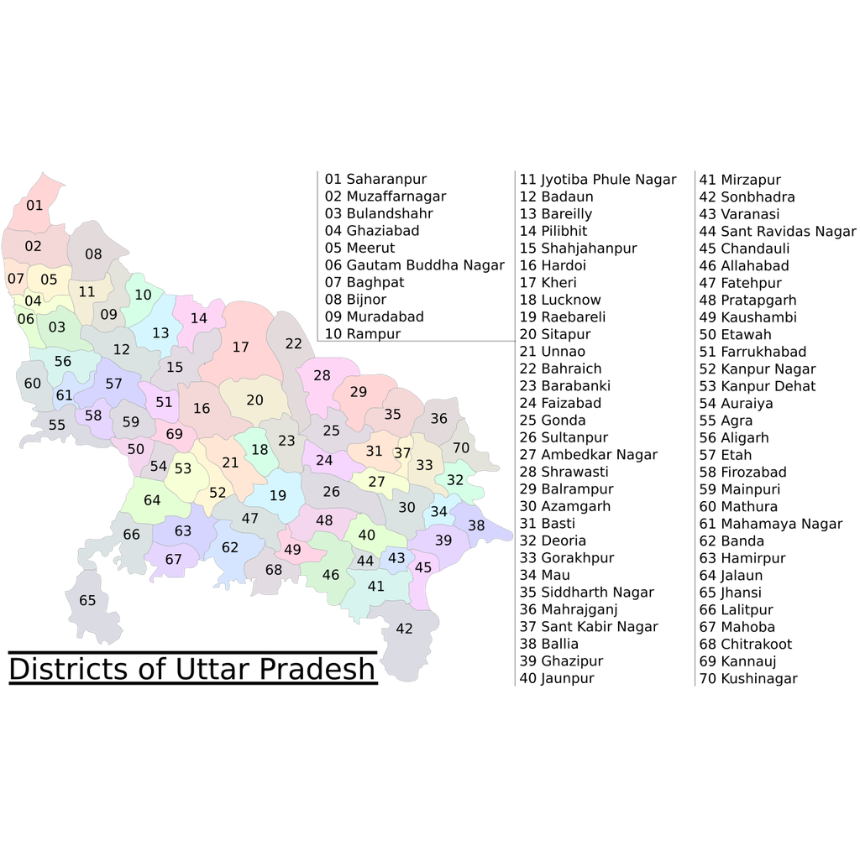
Uttar Pradesh is witnessing a steady expansion of its logistics and transport infrastructure, with a growing multimodal network linking eastern and western parts of the state. The development is being driven by investments in expressways, freight corridors, airports and logistics parks over the past few years.
According to the LEADS 2025, the state has been placed in the ‘Exemplar’ category, indicating relatively strong performance across parameters such as infrastructure, logistics services, regulatory environment and digital systems. The report notes that Uttar Pradesh has outperformed the national average among landlocked states on several indicators.
A series of expressways—including the Purvanchal, Bundelkhand, Gorakhpur Link, Agra-Lucknow and Yamuna corridors, along with the under-construction Ganga Expressway—have improved road connectivity between key regions and the National Capital Region. This has reduced transit time for goods and improved access to industrial centres.
Rail-based freight movement has also been strengthened through the Eastern and Western Dedicated Freight Corridors, which are expected to support long-distance cargo movement and ease congestion on existing rail networks.
A multimodal logistics hub under development at Dadri in Greater Noida is likely to play a role in cargo handling and warehousing, while additional logistics parks are planned or underway in locations such as Boraki, Kanpur, Gorakhpur and Tappal-Bajna.
The Noida International Airport at Jewar is being positioned as a cargo and aviation hub, with connectivity to road and rail infrastructure expected to support freight movement. Inland waterways infrastructure, including the Varanasi Multimodal Terminal, is also being integrated into the broader logistics network.
In the agriculture sector, cold storage, warehousing and distribution facilities are being expanded to support supply chains for perishable goods. At the same time, dedicated storage infrastructure is being developed for sectors such as e-commerce, retail and food processing.
Policy measures such as the ‘Nivesh Mitra’ single-window system and the use of GIS-based planning tools have been introduced to streamline approvals and improve coordination between departments. Officials say these steps have contributed to an increase in investment proposals in logistics and warehousing, although the pace of implementation and project completion remains a key factor.
While the expansion of infrastructure has improved connectivity and logistics capacity, analysts note that the extent to which these developments translate into sustained industrial growth and private investment will depend on execution, demand conditions and broader economic factors.